


POD! On YIMBY Pod this week, Martin and I reflect on Britain’s AI strategy and how it’s basically to make the best of a bad situation. Then I speak to Hannah Keenan from the Institute for Government, who patiently explains to me why I was totally wrong on the pod a few weeks ago. Listen here, or wherever you get your pods.
ICYMI! Over the bank holiday I posted another long essay on Palantir, and tried to figure out whether the company is good or evil. Go check it out if you missed it!
In the next few weeks a decision could be made that will decide whether HS2 will be a success – or a fiasco.
If nothing changes, it is possible that when HS2 services to Manchester begin in the late 2030s, the first trains to leave London’s new Old Oak Common mega-station will be completely full – from day one.1
It’s not just that there will be no extra passenger capacity created by the new railway. The new Manchester train could actually be even worse than it is now, with fewer total seats than there are now on the old West Coast Main Line (WCML) service from Euston.2
Yes, this is an absolutely mad situation to be in.
But it gets worse. Though the Department for Transport (DfT) is by now well aware of this possibility, the widely expected fix, which might avoid embarrassing headlines on day one, could screw up the railway even more in the long run.
However, there is good news. There is a way out of the mess, and a potential solution to both problems. But there is also bad news – the guy who came up with the plan was sacked last week for telling parliamentarians about his plan.
Intrigued? Pull on your anorak and grab your spotter’s notebook, this is going to be a nerdy one.
If you value journalism like this, please subscribe and support my work, as it is only thanks to you that I can spend the time digging through the brain-breaking complexities you’re about to learn about.
The original sin
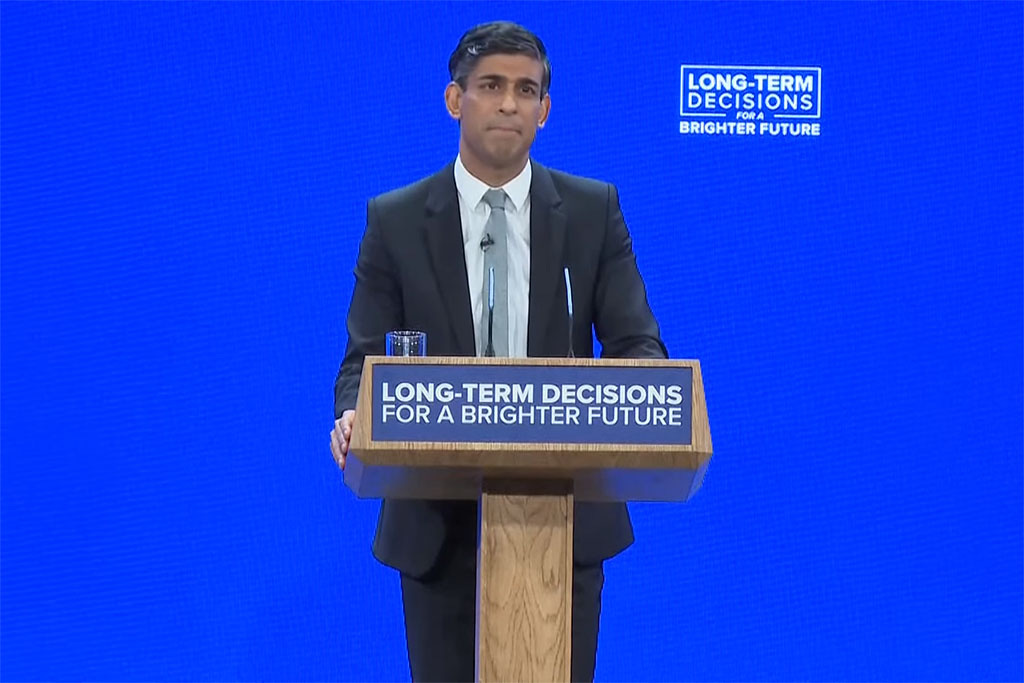
The story begins at the 2023 Conservative Party conference. You might remember it, as it was the one where then Prime Minister Rishi Sunak chose short-term political expediency3 over the long-term economic health of the country, and announced the cancellation of the Birmingham-to-Manchester leg of HS2.
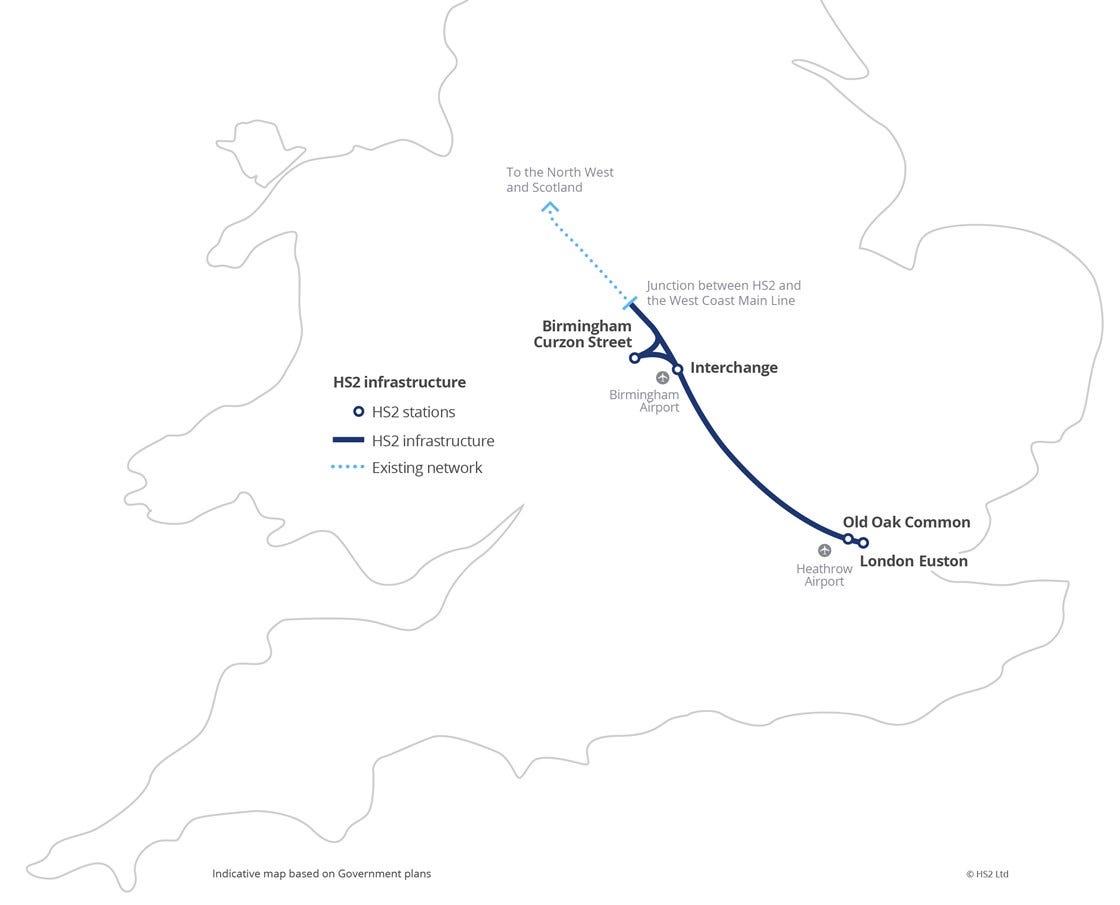
The new plan for HS2 was that trains to Manchester would travel from London on shiny, new, high-speed tracks, and would then join the existing WCML just north of Birmingham, at Handsacre, near Lichfield.
In principle, this might sound like an elegant fix. HS2 trains will still get to Manchester, as promised. They’ll just be a little slower than if they were on dedicated high-speed tracks. But the reality is more complicated – and the curtailing of the high speed line actually creates two downstream problems.
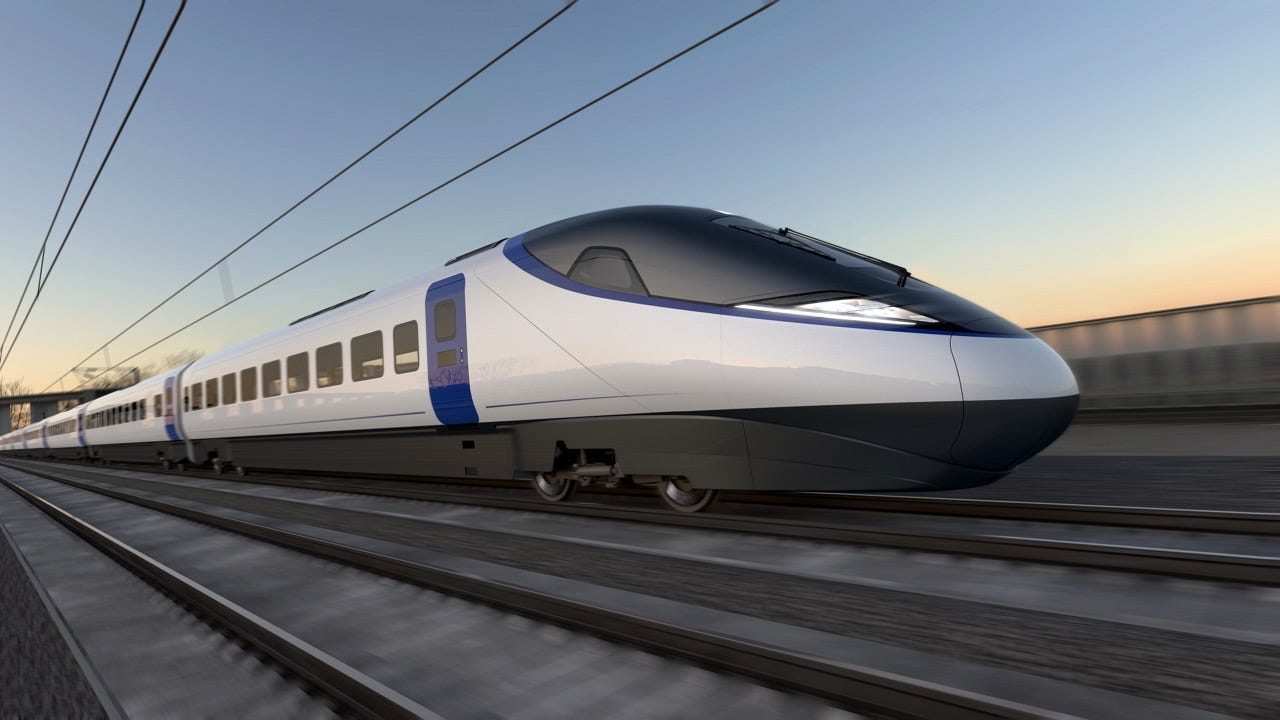
The first is the trains. HS2 trains are planned to be 200m long, with 504 seats. This is shorter than the existing London to Manchester trains on the WCML, the Pendolinos, which are 265m long and have 607 seats.
But this wasn’t going to be a problem, as the new trains are designed so that two can be coupled together, forming a 400m long train, together sending 1008 seats heading to Manchester – roughly a 40% increase in the number of passengers who could be carried!
Except… because the Manchester leg of the railway was chopped, this plan no longer works. Without the new line, Manchester Piccadilly station is no longer going to receive the billions of pounds of rebuilding necessary to accommodate 400m trains.
So this essentially means that when Pendolinos are switched out for HS2, the arriving trains will only be 200m long, reducing the number of seats on each train service arriving at Piccadilly station.
At this point, you might be thinking – well, why not just run more trains? If the trains are shorter, we could still make up the difference by running more of them. Or why don’t we really max out trains to Manchester, by continuing to run slower, WCML trains to Manchester from London in addition to HS2 trains?
Unfortunately, this gets back to the entire premise of HS2.
Despite the name, as rail bores like me like to remind people, High Speed 2 isn’t actually all about increasing speed – it’s about increasing capacity. And one of the reasons the new railway was planned in the first place is because the WCML is already overloaded with rail traffic. DfT estimates that by the mid-2030s, sections of the line north of Birmingham will not be able to physically fit any more trains – before HS2 services even start, and add to the crunch.
If you want the really nerdy details, I understand that one particular pinch point is between Lichfield and Stafford – the point where the WCML, HS2 and trains from Birmingham heading to Manchester all converge. And this is a hard constraint. If we want HS2 trains to run north of Birmingham, then it will necessarily mean removing other services from the line.4
So what can possibly be done? One terrible option could be to make the dramatic decision to basically cut off HS2 from the north entirely, and have it operate as a self-contained railway that only shuttles between London and Birmingham.
That way, trains north of Birmingham would basically remain as they are now, with Pendolinos on the WCML operating the same train service they do now, between London, Manchester, Liverpool, Glasgow and so on.
However, this is a non-starter for a couple of reasons. The first is political – you’d have to be a brave and possibly politically suicidal politician to deny the north access to HS2. And every indication is that nobody wants to do that, presumably because it might cause Andy Burnham to raise an army and march on London.5
But more substantively, the problem with doing this is that it would pretty much defeat much of the point of HS2 in the first place – because as mentioned, the point of HS2 is to increase capacity. And the way it is designed to do this is by moving long-distance services from the WCML to the new line, thus freeing up space on the WCML for more local passenger services and more freight traffic. If long-distance services are still being operated on the WCML, it makes it much more difficult to operate slower, stopping services, and thus retains most of the same bottlenecks that HS2 is supposed to remove.
Fixing the trains
What’s clear then is that short of actually building HS2 as originally intended (we can dream), the limiting factor is space on the actual rails. So if we can’t change this, what about changing the trains themselves? Why stick to 200m trains?
And now we get to the reason why this is a surprisingly urgent problem.
Sometime soon, possibly in the next few weeks, I understand that the Department for Transport is expecting to finalise the HS2 train order with Hitachi and Alstom, first made in 2021. This is because we’re reaching the point in the construction timeline where final decisions need to be made, as construction of the depots to house the trains will soon have to start, not to mention construction of the trains themselves.6
As things stand, the plan is to build 54x 200m trains as originally planned, but there are reports and rumours that suggest that the contract could be changed at the last minute to instead instruct Hitachi and Alstom to build trains that are between 250m and 260m7 long instead, by essentially bolting on a couple of extra carriages to each train.
The theory is that this would at least solve the most embarrassing problem, the fact that HS2 will reduce capacity to Manchester. If trains are 250m, it would bump the seating on an individual train to around 630 seats – slightly more than an 11-car Pendolino!
However, unfortunately this isn’t the Get-Out-Of-Jail-Free card that DfT might be hoping for either, as the problem with this approach is that it would unleash a whole host of other problems upon the combined HS2/WCML railway.
For example, 250m trains could complicate construction of the railway – which is already underway – as trains, depots and other infrastructure would have to be redesigned.
And operationally, it would complicate the running of HS2, as you can’t couple together 250m long trains like you can with 200m trains, as HS2 platforms won’t be long enough.8
But there is a bigger problem with the new HS2 trains – regardless of whether they are 200m or 250m. And that’s what happens once they join the WCML north of Birmingham.
Think about the existing Pendolino trains. What’s the one thing everyone knows about them? No, not that the trains originally had their toilet ventilation too close to the air conditioning intake. It’s the fact that they tilt, so that they can take curves on a winding, Victorian railway at faster speeds than conventional trains.
On the WCML, this means that there are certain sections where the Pendolinos can travel at 125mph, whereas a non-tilting train would be stuck at 110mph. Which is a problem if you’re replacing the Pendolinos with non-tilting, HS2 trains. As fast as they can travel on the newly built HS2 track, the new trains will still be limited to non-tilting speeds on the WCML section, as the limitation is the track, not the trains.
And this could make a real difference to journey times in the north. Though London-to-Birmingham would be faster on HS2 tracks, with new HS2 trains, some routes that travel further north would be slower than now.
For example, according to an analysis by HS2 Ltd, travel from Glasgow to Handsacre (the point where trains will join HS2) could be 13 minutes slower than it is now, because of the lack of tilting on the new trains.
On net, this might still work out positively in terms of time saved, but saving would get worse the further north you go, as trains will have to travel on more non-HS2 track.
For example, at present, London to Glasgow takes about 4 hours 30 minutes. Under the original HS2 plan9 which would have built a new line all the way to Manchester, that would have fallen to around 3 hours 38 minutes – saving almost 50 minutes. But with HS2 now curtailed, according to Rail Engineer, the same trip is expected to take around 4 hours 18 minutes, saving a grand total of… 12 minutes on what the journey is today.
So for people in Glasgow, even with 250m trains, HS2 might end up being a train that has more or less the same capacity as now, which runs slower for shorter distance services, and which gets you to London just 12 minutes faster. All for the princely sum of £80bn.
The Gibb plan
I did warn you that this was a mad situation. Though HS2 will still work for some people – it’ll be pretty nice to travel from Birmingham to London – Rishi Sunak’s world-historic bad decision will make the new railway worse for many others.
However, there is a plan out there to make the best of this bad situation. That’s the good news. The bad news is that the guy who came up with it was recently sacked for talking about it.
Chris Gibb is a veteran railwayman, who has spent his career working on, and then managing the railway network. Between 2007 and 2013 he was Chief Operating Officer for Virgin West Coast, and his job was running the WCML. More recently, he was a non-executive director of DfT Operator Ltd (DFTO), the government-run company that operates a number of nationalised train companies.
This was until he spoke in a personal capacity to the All-Party Parliamentary Rail Group about his proposed remedy for the nightmare I describe above – and the Chair of DFTO promptly removed him.
I’m not going to dwell on the issue of his removal, as these things are invariably messy, and I don’t know any more beyond what has been reported. But suffice to say, it seems like a crazy decision to me.
But anyway, what I do know is that politicians and the Department for Transport really should be taking his HS2 plan seriously – as at least to my layperson’s eyes, it seems like a rather good one.
So how does Gibb propose we solve the looming capacity problem?
Essentially, what he envisages is moving from treating HS2 as a new, standalone thing – and instead thinking about it as part of a combined railway, internalising that the Handsacre WCML crossover is going to be a fact of life from now on.
This is actually quite a big philosophical break with the past, as since its inception, HS2 had been imagined as something that ran almost entirely separately to the rest of the rail network.
But what does this mean in practice? Essentially, Gibb thinks HS2 should take advantage of a rather lucky coincidence.
As alluded to above, because of all of the delays and turmoil in the HS2 programme, though there’s no ‘official’ date that has been announced, the expectation is now that HS2 services will begin some time in the late 2030s.10
And this happens to be around the same time that the current fleet of Pendolinos on the WCML will reach retirement – which is currently expected to be in the early 2040s.11
So Gibb’s proposal is that the best way forward is to keep the existing HS2 train order as-is, for the sake of simplicity. Build the long-planned 200m trains (that couple to 400m), so they can be used on the London to Birmingham leg of the railway, as well as on other lower-volume HS2 and WCML services, such as London to Liverpool, or Birmingham to Manchester12.13
But what about Manchester, Glasgow and the north? Here, Gibb argues that the Pendolinos should be replaced by commissioning a brand new, more customised train that is specifically designed for running on both HS2 and the WCML north of Handsacre.
What does this look like in practice? For a start, these new trains would be designed to both run on HS2 and tilt on the WCML – so there’s no loss of speed to the north. And to maximise capacity, these trains would be specifically designed to be a very precise 286m long – because this is the exact length that maxes out the platforms at Manchester Piccadilly and Glasgow Central. Gibb believes that these trains could conceivably have up to 750 seats each – improving capacity as much as possible, without needing to rebuild the stations.
In other words, it’s a pretty neat solution that avoids both reducing seat capacity and slowing down journeys. Though it doesn’t come without complexities.
For example, to make the most of his plan, Gibb argues that it would be wise to upgrade the signalling on the WCML to modern standards,14 which would allow trains to run faster on the conventional railway anyway – and when coupled with tilting, could reduce journey times further north.
Though perhaps the more dangerous trade-off for politicians is that it would entwine HS2’s opening date with the fate of the Pendolino replacements, which would need to be a pretty custom-built train to meet the criteria of both HS2 and tilt at the same time, and there would be a separate political fight over procuring the replacements in time. So it would be more complicated than simply adding a couple of extra carriages like the 250m proposal.
But even so, despite this I still think this is a trade-off worth making. If we want a railway that actually functions as intended in 2039, this appears to be the way to do it.
Details matter
If your head hurts after reading so much punishing detail about capacity constraints on Britain’s railway, then it’s understandable – the closer you look, the more wildly complicated the technical details become.
But getting the details right is important, because the decisions being made about HS2 today are creating path-dependencies that will affect how Britain’s railways work for decades, maybe even centuries to come.
We know this because it has happened before. Remember the pinch point between Lichfield and Stafford, that means we can’t run any more trains to Manchester? This is known as the Shugborough Tunnel, and it was built in 1845 to placate Thomas Anson, the 1st Earl of Lichfield, who didn’t want trains running across his land.
Today, nearly 200 years on, a significant number of London to Manchester trains still runs through this tunnel, and it is one of the reasons we are in the current mess. It’s path-dependencies all the way down.
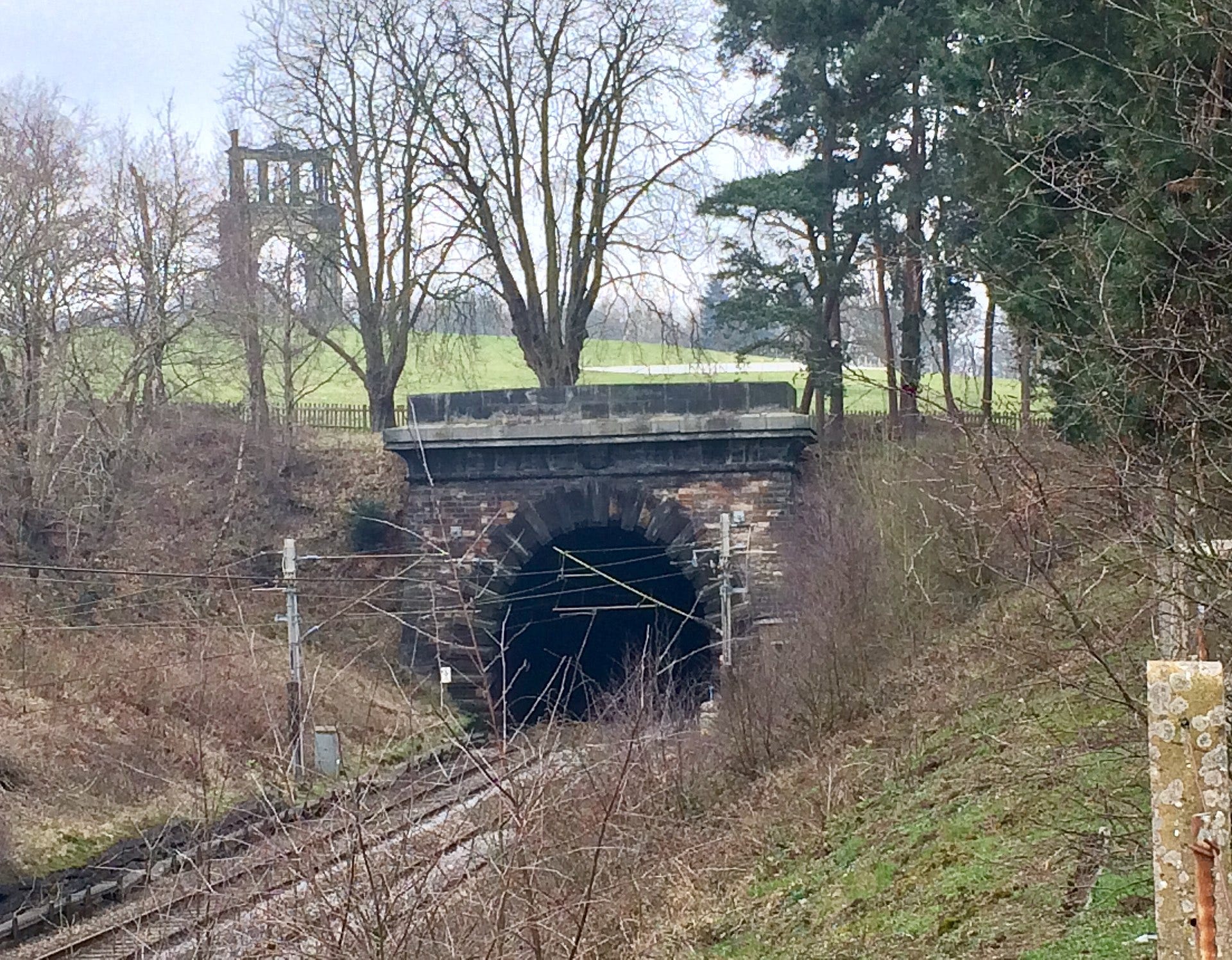

But this should also serve as a reminder of how the choices we make today can have a long-lasting impact. And it’s possible now to imagine how the wrong choice of train today could echo into the future.
In his speech to the Parliamentary group, Gibb mentioned how if HS2 is overloaded from day one, railway managers in the future might decide they have no choice but to hike prices or make ticket reservations mandatory, like we currently have on the Eurostar, to reduce demand.
This wouldn’t just be annoying for passengers, it would fundamentally change the character of the railway and how people use it – and it would make it less useful.
Take a football match, for example. What if Manchester United find themselves in an FA Cup semi-final at Wembley at short notice?15 If train tickets are sold out long in advance, it means that fans either won’t be able to get to the match, or will be forced to drive instead – which is the opposite of what we want.
But whether or not this remedy is settled upon, or another way to ration demand is determined, this is obviously a bad situation to be in. And this brings me to my final point: What is HS2 actually for? If it results in fewer seats and slower trains, what’s it all for?
Despite my carping about the detail above, I still strongly believe that finishing HS2 is absolutely critical to Britain’s future.
But the point of building a new railway isn’t simply because big infrastructure projects are interesting and trains are cool. HS2 should be a strategic national asset that grows the economy, decarbonises transport, and helps people get about.
This is why the extra capacity is what matters. It is the extra space freed up by the WCML where new local rail services will run, connecting smaller towns to larger cities with higher-quality rail services. It is the extra seats on trains that will make it possible for more economic activity to happen, and for commuters to live in high-growth areas where housing is being built, like Milton Keynes. And it is the improved connectivity with Manchester, Glasgow and beyond that will level up the north and stimulate growth.
I asked both HS2 Ltd and DfT if they had looked at the Gibb plan. A spokesperson for HS2 Ltd told me that they haven’t. DfT, sadly, hasn’t got back to me.16
But I hope they will take it seriously, so that when the ribbon is cut in 2039 and the first trains leave for Manchester, we’re not left quietly wondering if we’ve just built a new Shugborough Tunnel.
If you’ve read this far, then make sure you subscribe (for free!) to get my newsletter direct to your inbox.
It is likely that the first actual HS2 service to go live will be the London to Birmingham route – which will be fine. It’s when Manchester services start running that problems will begin.
Eventually HS2 trains will also leave from Euston, but that’s a story for another day…
Er, not that it turned out to be particularly expedient.
This was also the conclusion of the William Barter, who used to work on timetable planning for HS2. When considering the planned seven HS2 services per hour north of Birmingham (3 to Manchester, 1 to Glasgow, 1 to Preston and 2 to Liverpool), he told Parliament that:
With the HS2 Phase 1 service of seven trains per hour, and the conventional specification tested in 2014, the WCML between Handsacre and Crewe will be ‘full’, in that nothing can be added unless something else is removed. Growth beyond that very unambitious specification will be impracticable, and even at that level of service acceptable reliability of operation is doubtful.
They’d have to march, because they wouldn’t be able to travel there on the high speed railway.
The 2039 launch might sound impossibly far away, but the trains will have to be completed and tested some time in advance, as will the actual HS2 line. And hey, if we’re wildly optimistic I guess there’s still a chance HS2 might be ready to go by 2036, which is now only a decade away.
It’s unclear whether 250m or 260m is the intention, but I’ve just used 250m for the rest of this piece for ease, as there are already too many numbers.
I imagine one reason it makes it more annoying operationally is because if you have 54 identical trains, it becomes relatively easy to swap one out for another if one breaks down. If a number of them are different or customised, it limits optionality later on. (It’s the same reason why low-cost airlines like Ryanair typically try to use as few different types of plane as possible.)
I know this arguably isn’t the ‘original’ plan as earlier plans imagined HS2 also going to Glasgow and Leeds and so on, but the Manchester plan was the first serious plan they were actually going to try to build.
Don’t think about how old you’ll be, it’s too depressing.
Seriously, just don’t even think about it. Don’t look at your dog and imagine taking it on the new railway, as it just isn’t going to happen.
Existing Birmingham to Manchester trains are non-tilting Voyagers that have around 250 seats, or can be coupled to 500 seats. So a single HS2 train would be a modern, replacement that would either increase or match capacity.
Though I would change one thing. I’ve heard on the grapevine that the contracts for the trains were written to guarantee a minimum wifi speed of… (wait for it)… 500Mbps. Not for each passenger, but for the entire train. In what will be 2039. Seriously.
The proposal is to upgrade signals to the European Train Control System (ETCS), which is used throughout Europe and has been around for a long time. As I understand it, the core innovation is that signals appear on screen in the train cab, and don’t rely on the driver spotting signs and lights on the sides of the railway – which means they can safely move faster.
I am not football literate, but I have a feeling I should have said Manchester City here, to better reflect current circumstances?
If they do – hopefully after this piece hits their Microsoft Teams chat – I’ll post an update.
Interesting to see the delay of the Mark Wild reset plan to end of year and that his top workstream is speed reductions. Let’s keep up the noise to ensure he’s looking at this.
Also big benefits for Brum here in terms of faster more frequent connections north.
https://www.greensignals.org/podcast/sacked-from-dft-operator-the-exclusive-full-interview-with-chris-gibb/
In Chris Gibbs own words…