POD! On YIMBY Pod this week, I bore on about visiting Svalbard some more, and then we speak to Andrew Bennett, the brains behind the UK Dynamism Fund – and he explains how he’s supporting projects that can help Britain grow again. Listen here, or wherever you get your pods.
I really want to write about politics again.
The big story in Westminster over the last week has been one that, on paper, I should find very exciting. It seems that – finally – serious conversations have started about the prospect of Britain rejoining the European Union.
This is something that I feel strongly about. But as much as I try to care, the truth is that most of the discourse has left me cold and disinterested.
Why? Because I know that any movement towards Europe will take a very long time – maybe a decade if we go all the way back in. Yet, meanwhile, it feels as though the future is changing dramatically on an almost daily basis. So how the hell am I supposed to imagine what Britain and the world will be like in several years’ time?
I admit this perhaps says more about my own psyche than the real world, but it really does feel a little like I’m living in two parallel realities at the moment.
In one, life continues as normal. There’s a debate about Britain’s place in Europe. There are arguments about welfare reform. Occasionally we remember that climate change is a thing we need to worry about and think about that too.
But then there’s the other reality, where every time I glance at my timeline, I see an endless feed of genuinely jaw-dropping technological developments that would have been completely inconceivable a few months ago, let alone years – from a proof of the Riemann hypothesis on down.
And if it turns out that this latter reality is the one we inhabit, and the pace of AI-driven change continues to accelerate (whether or not we achieve ‘super-intelligence’), the question of what Britain’s trade policy should be in a decade seems too difficult to answer.
That’s why this week, instead of wading in on the political debate of the day, I’m going to write about something that isn’t far over the horizon: the fact that in the last few months, the entire business model of the software industry has just been blown up.
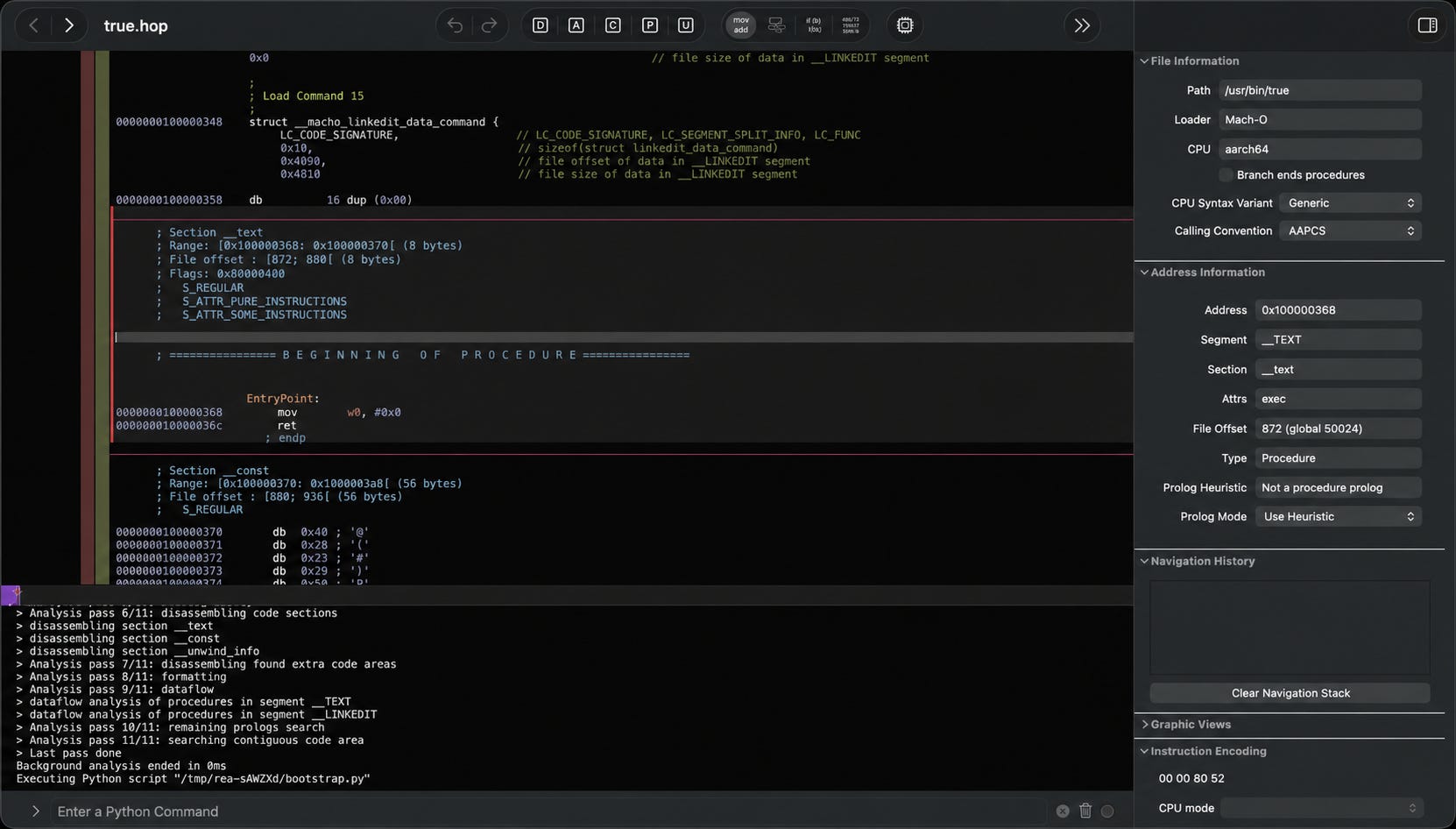
Specifically, I want to focus on the new ability to reverse engineer pretty much any software, as I think the implications are pretty vast.
You may have noticed the uptick in recent weeks of critical security incidents, in which infrastructure has been taken down, and several high-profile apps have received urgent patches. For example, last week the National Cyber Security Centre announced that it had secretly been working to secure the software that controls thousands of supermarket fridges and freezers, to protect them from hackers.
This is (almost) all downstream of AI reverse engineering.
But this is only the tip of the iceberg – so let’s dig into what it means now that every app ever made can, in theory, be taken apart like Lego.
Reverse Engineer Anything explained