


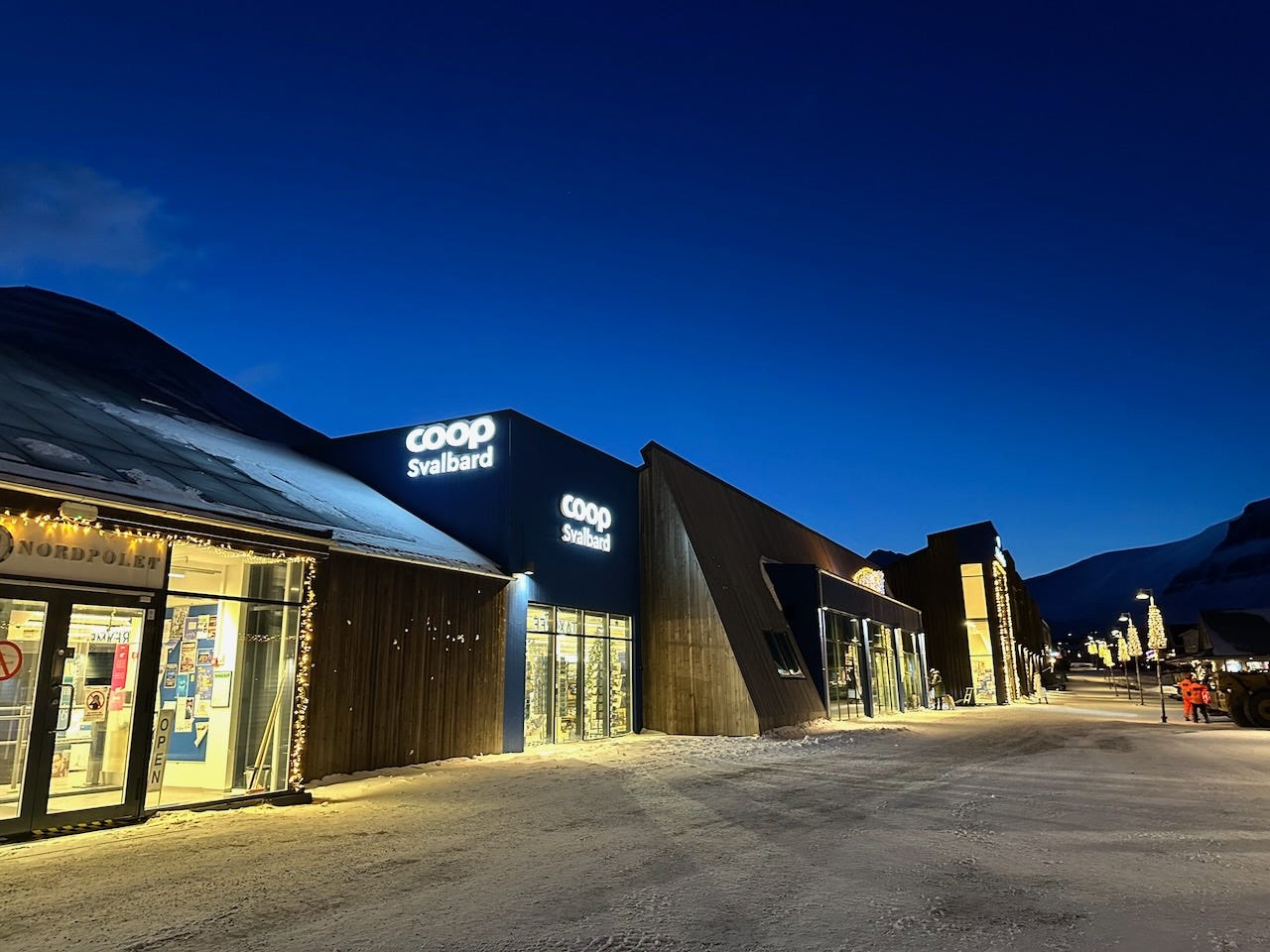
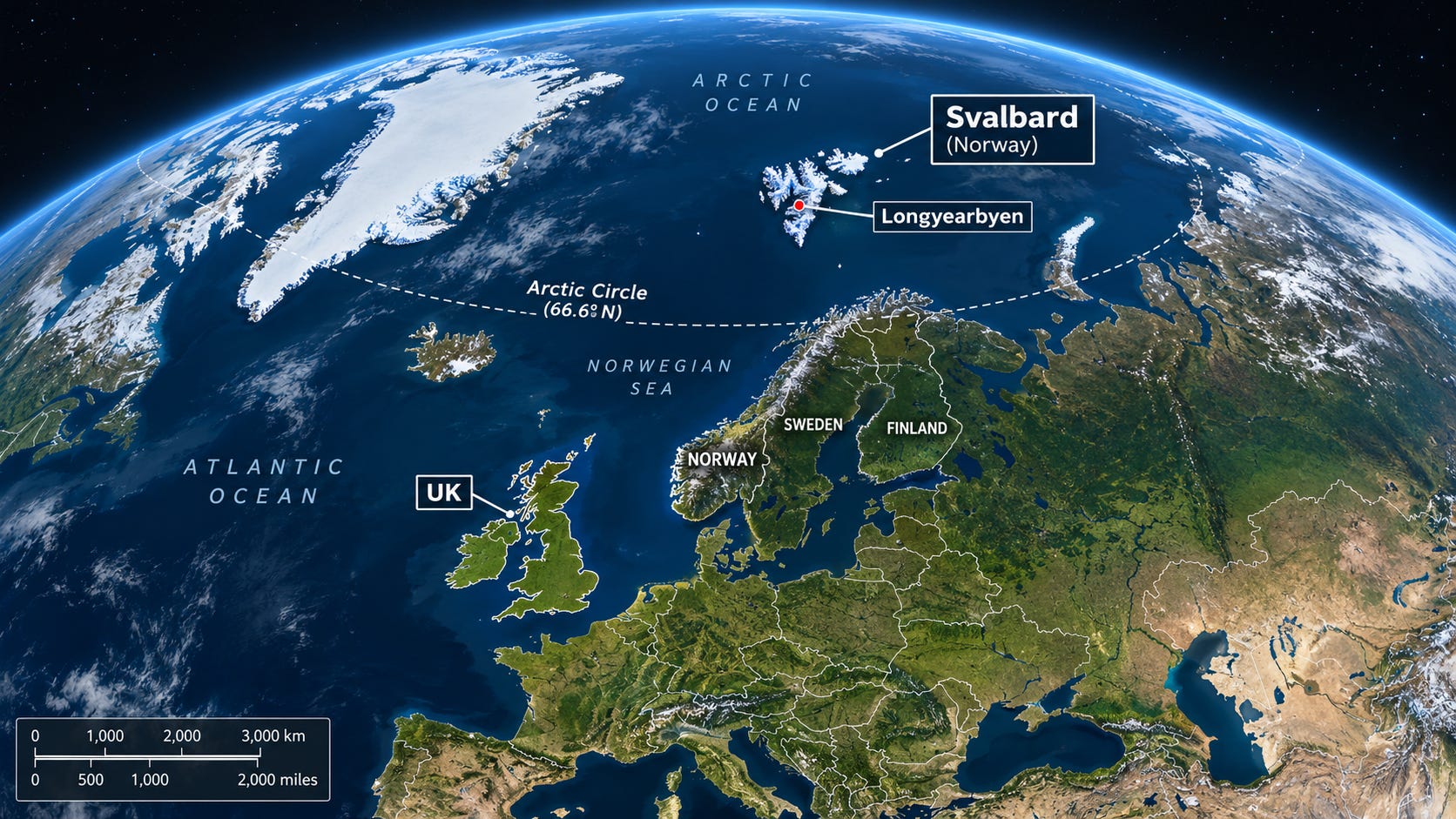
I’m writing this just 1,300km from the North Pole.
I’m in Longyearbyen, on the island of Svalbard in the Arctic Circle. It’s arguably the northernmost town in the world, and around 2,500 people call it home. It is about as remote as it is possible to be, without being accompanied by Bear Grylls.
But here’s the mad thing about Longyearbyen. It’s surprisingly normal.
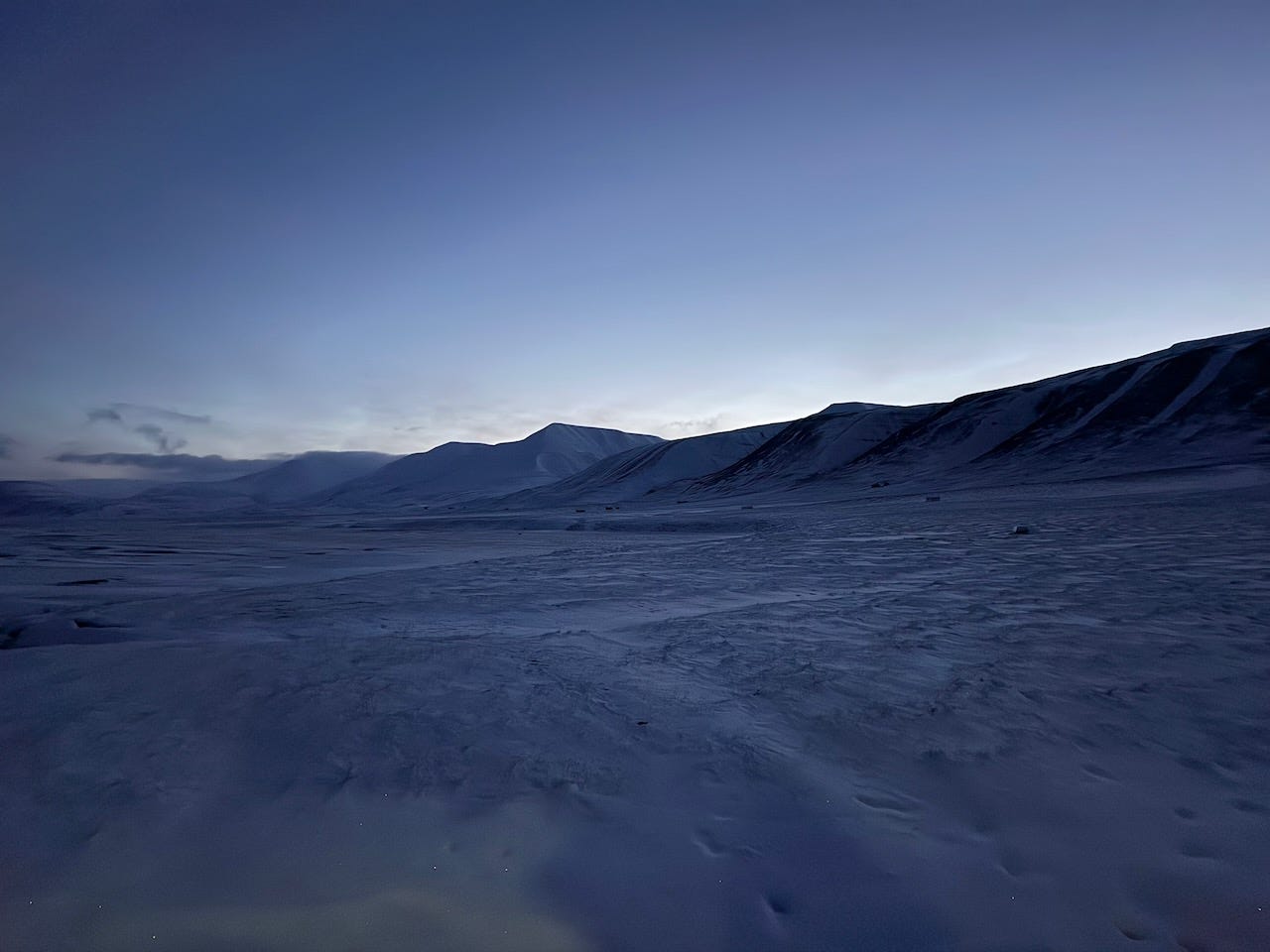
Despite the extreme location, I’m not writing this while shivering inside a fishing hut in the dark. I’m actually sat on a comfortable IKEA sofa, inside a cosy Airbnb. There is high-speed broadband and a reliable 5G signal.1 The town has a number of bars and restaurants. And there is a fully stocked supermarket, which offers exactly the same range of products you might find hundreds of miles further south, on the other side of the Barents Sea.
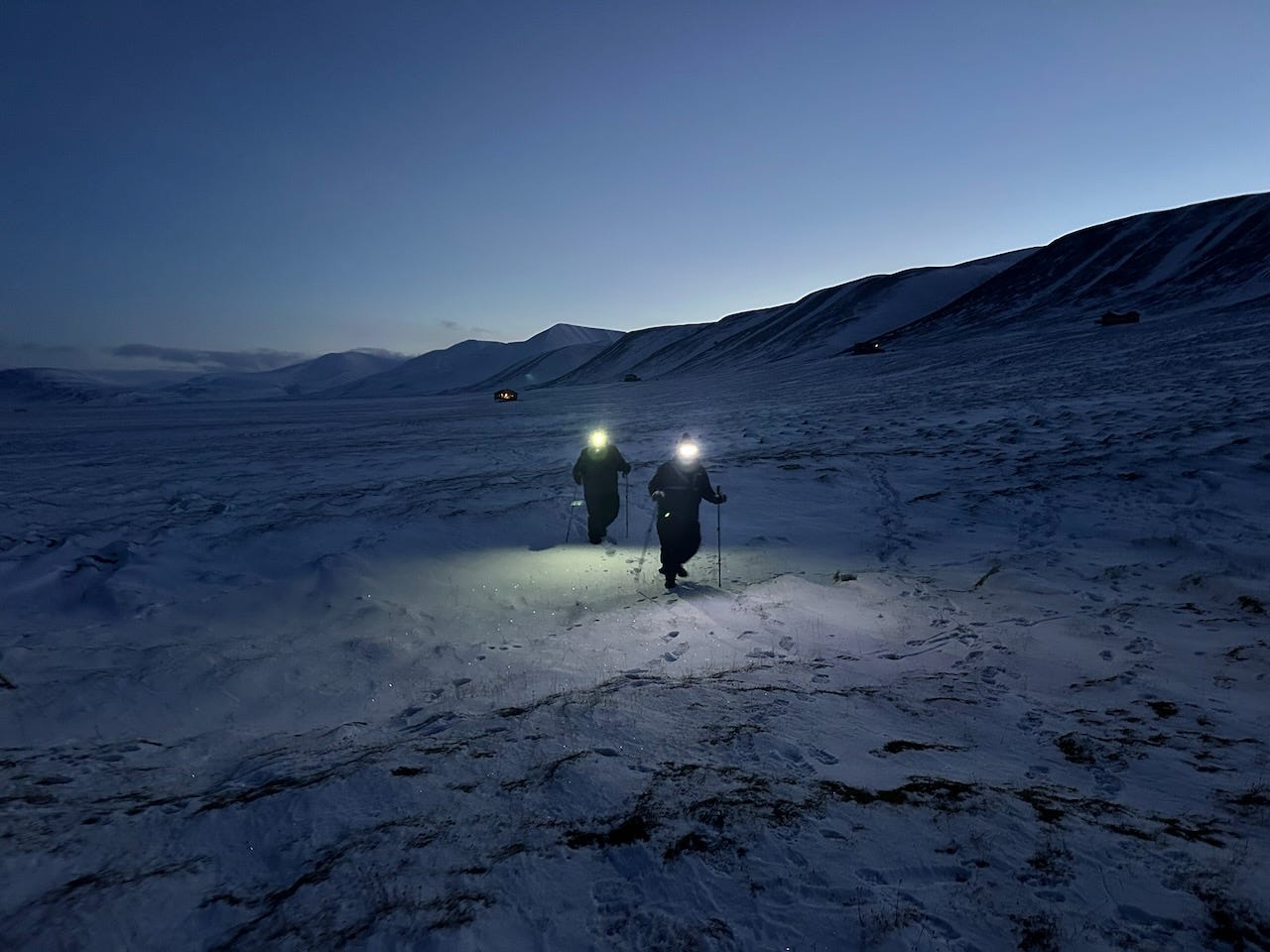
The only real difference is that it’s strongly advisable to wear a couple of extra layers when heading outside, and that for four months every year the entire town is plunged into a permanent ‘polar night’, as the sun doesn’t rise above the horizon.
Precariousness
However, despite the normality, the overwhelming sense you get when staying in Longyearbyen is one of fragility. Once you learn how the town works, you become acutely aware of how the comforts of modern life are dangling by a thread.
For example, farming is basically impossible on Svalbard. Temperatures rarely rise above zero, making it unsuitable for growing. Animals require hay and feed, which likewise cannot be grown locally.2 So the only reason denizens of Longyearbyen don’t go hungry is that supplies arrive regularly in shipping containers.
Power is similarly dependent. Historically, the town was illuminated and heated by coal, which is abundant below the surface of the island. But in 2023, the town switched to generating all of its power from diesel imported by tanker. Given the darkness and freezing temperatures, it is not a place where solar panels and batteries will work.
And connectivity is precarious too. The only things that reliably tether Svalbard to the mainland are two fibre-optic cables. If they were to be severed, Starlink might keep Svalbard from being completely isolated, but it would definitely pose a challenge to life as normal – making it harder to do everything from stream video to pay with Chip & Pin in Cafe Huskies.
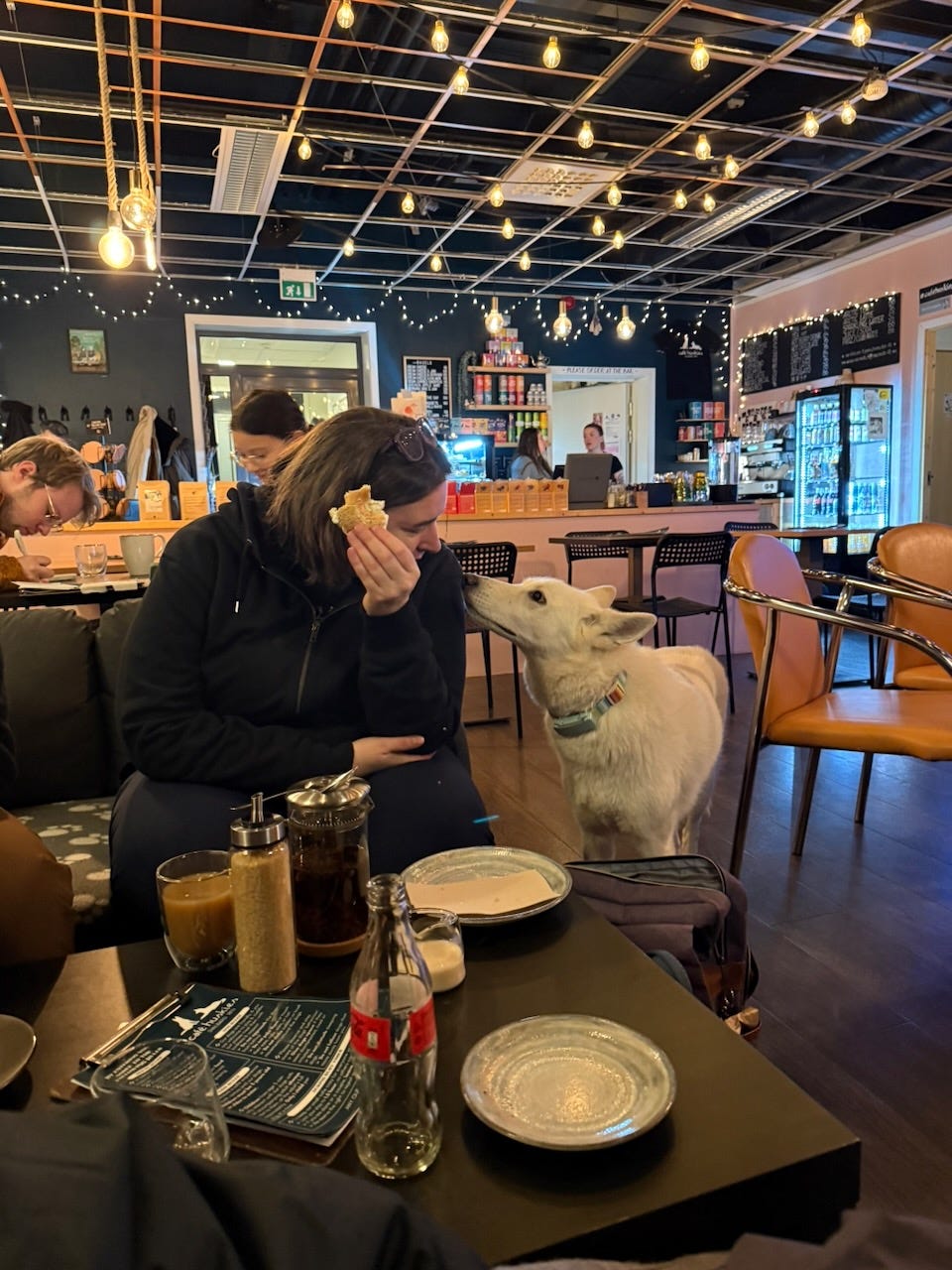
This is why life feels precarious. It is far too easy to imagine how just one thing could go wrong – and suddenly plunge this outpost of civilisation into an existential crisis.
What if the fibre-optic cables linking Svalbard to the rest of the world are severed by a geopolitical rival? What if a ship bringing in food can’t travel because the weather is bad? What if climate change renders the water undrinkable? Or what if surging oil prices, dictated by events on the other side of the world, suddenly make the electricity needed to heat homes and keep the lights on too expensive?
Actually, we don’t have to imagine. Svalbard has flirted with danger before.
In 2022, one of the fibre-optic cables was mysteriously damaged – leaving the island dependent on just one tenuous connection. Since 2025, the official advice has been that tap water on the island is no longer safe to drink – the elevated concentrations of manganese, sulphate and nickel make it too dangerous, and there is no backup supply. So for over a year, locals have been forced to drink purified bottled water, produced at a local distillery and distributed at the supermarket.
And, of course, like everywhere, the Ukraine and Iran wars have spiked the price of energy – which has made living in Longyearbyen harder. One local we spoke to, who moved to Svalbard from the Philippines, complained that the cost of powering his two-bedroom flat has tripled, from 1,100 kroner every three months, to the same price every month.
Another island
The precariousness of modern life on Svalbard reminds me of another island. Britain.
Over the last few years, whether thanks to Russia, AI or just bad luck, we’ve experienced a number of major outages that have affected our critical infrastructure. A substation fire briefly paralysed Heathrow. A radio failure shut down a significant chunk of the rail network in the south of England, and then just a few weeks later a 90-second power cut disrupted rail services across the north. And just a few weeks ago, a supposed software error led to a significant air traffic control failure.
Then there have been the global outages that have impacted us, such as the disruption in recent days to Microsoft’s cloud services like Outlook and Teams.
We might think that we’re not quite in as precarious a position as Longyearbyen. We’re a country of 70 million people! And, at least by comparison to the Arctic Ocean, the weather here is temperate and sometimes even warm. We have that going for us.
But the reality is that the modern world is deeply complicated. The normal lives we lead rest on top of a dense mesh of invisible infrastructure and institutions. Our single points of failure may not be as obvious as those on Svalbard, but as recent disruption has shown, they do exist and can have consequences that are at best frustrating and could at worst be devastating.
So no wonder the government is advising us to buy canned food and wind-up radios.
However, the lesson of Svalbard is something else. If we are really interested in resilience, then ultimately we need to build the infrastructure that makes it possible to live in precarious circumstances. The supermarket in Longyearbyen might appear mundane, but its very existence is a testament to how the extraordinary can become ordinary – and why we need to work so hard to keep it that way.
The signal is actually more reliable on Svalbard. I had more reliable 5G hiking across the tundra than I did the last time I walked through Covent Garden.
Some animals used to be kept by mine workers on the island, fed with imported food, but this is no longer the case.
I just want to hear more about the guy who decided to move from the *Philippines* to *Svalbard*. That must be quite the culture and climate shock!