


POD! On YIMBY Pod this week, we talk about the Green Party’s unenthusiastic U-turn on nuclear energy, and discover why London could soon be getting a massive new heat-network spanning all the way from distant East London, right into the centre of the city. Listen here, or wherever you get your pods!
I finally decided to see what all of the fuss was about.
After years of reading absolutely incomprehensible posts from friends about The Traitors, I gave in and tuned into the first few episodes of the new celebrity series. After all, nine million people can’t be wrong, right?
However, I’m sad to say my reaction to the show was pretty lukewarm. Don’t get me wrong, many of the personalities on the show are fun to watch, including the excellent Hannah Fry, who once said nice things about my newsletter (and, implicitly, PAF liberation). But my frustration is with the format of the show itself, which beneath the dramatic music and gothic imagery, seems a bit half-baked.
Why? Essentially it’s not really clear why the ‘Traitors’ are traitors, and there simply isn’t enough actual information for the people guessing to go on, for the speculation at the core of the game to be meaningful.
Now, I admit that maybe this is part of the fun and I’m just a killjoy. I’ve heard the argument that the real appeal of the show is that it is a grand experiment in human psychology. We get to see how people spot patterns in noise, and how tribes and groups emerge even when there is no underlying signal.
But I just can’t get past the comparison to a similar, but much better gameshow, called The Mole, which aired way back in 2001 on Channel 5.
At the time, the show was very much Channel 5’s attempt to build something as splashy as Big Brother, and it largely failed in this endeavour. But for the few who watched, it was instantly compelling.1
The premise was simple: There were ten players tasked with completing different missions, similar to those on the Traitors, to earn money for a total prize pot. But one player had been secretly designated as the titular Mole, and their job was to try and actively sabotage the games. At the end of each episode, the players took a quiz, and the person furthest from guessing the identity of The Mole was booted off.
What made this format work better than Traitors was that it gave the missions a purpose in the context of the wider show.2 In Traitors, there’s no incentive for sabotage or any other, well, Traitor-like behaviour – and so for half of each episode’s runtime, it’s like the players are competing in a completely different show.3
But anyway, this is all a sidebar and an excuse to reminisce about a much better show. What I really want to talk about this week is one of the Traitors contestants. Not the strangely eccentric Richard E Grant, as I’ve got no idea what was going on there4 – but the first person who was booted out of the castle, Amol Rajan.
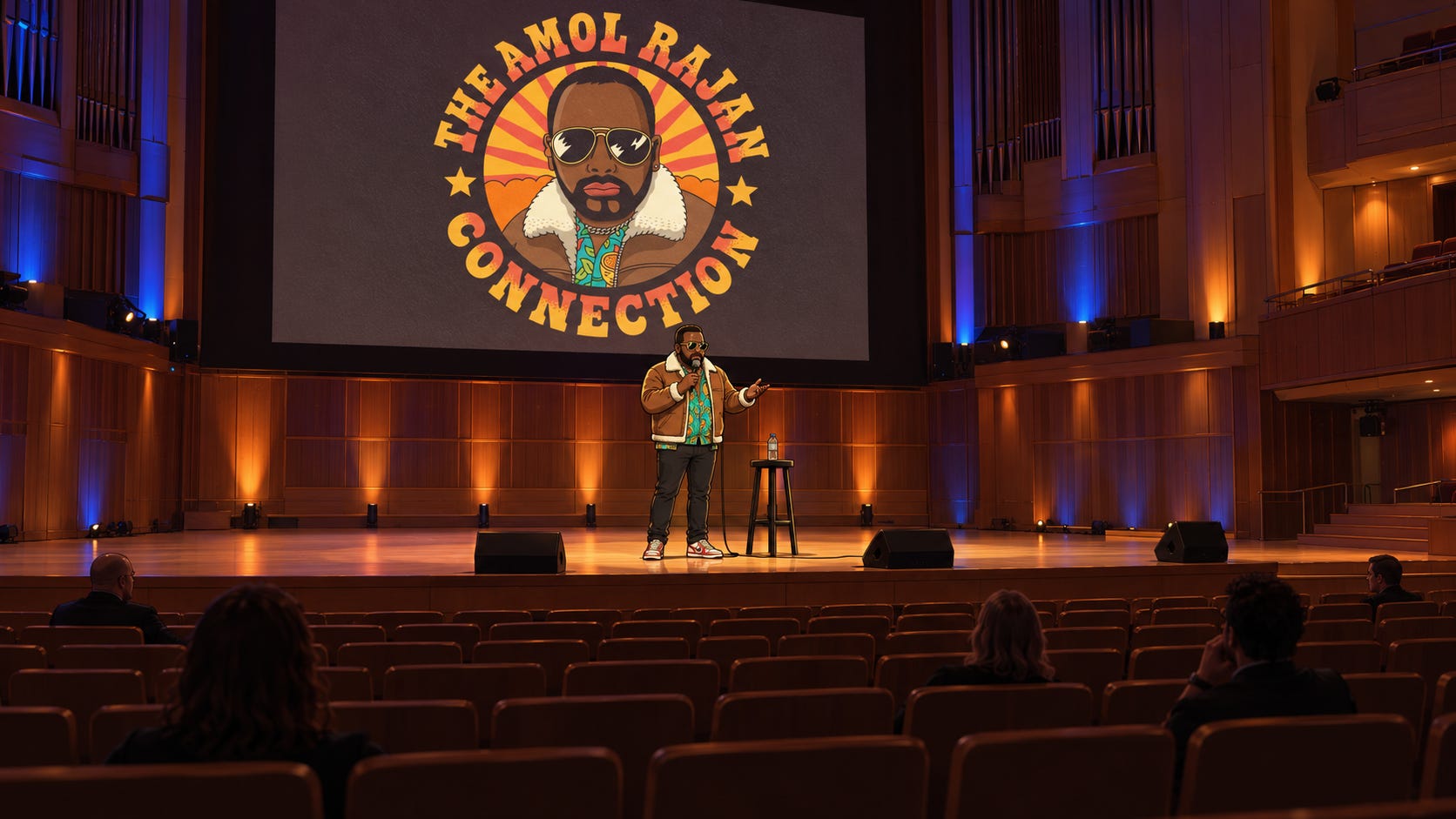
In case you missed it, tomorrow Rajan is due to launch his new podcast-slash-media-venture, The Amol Rajan Connection (ARC). He’s clearly aiming high with the show, and there’s clearly quite a lot of money behind it.
Yet with my media-business-analysis hat on,5 as likeable as Rajan may appear on screen, I must admit I’m incredibly doubtful that the new venture will prove successful.
So I thought this week I’d follow in the grand tradition of my analysis of other media properties like the New Statesman, Observer, Newsnight and Owen Jones, and make the case for why I think he’s unfortunately doomed to failure.
Now let’s get started.